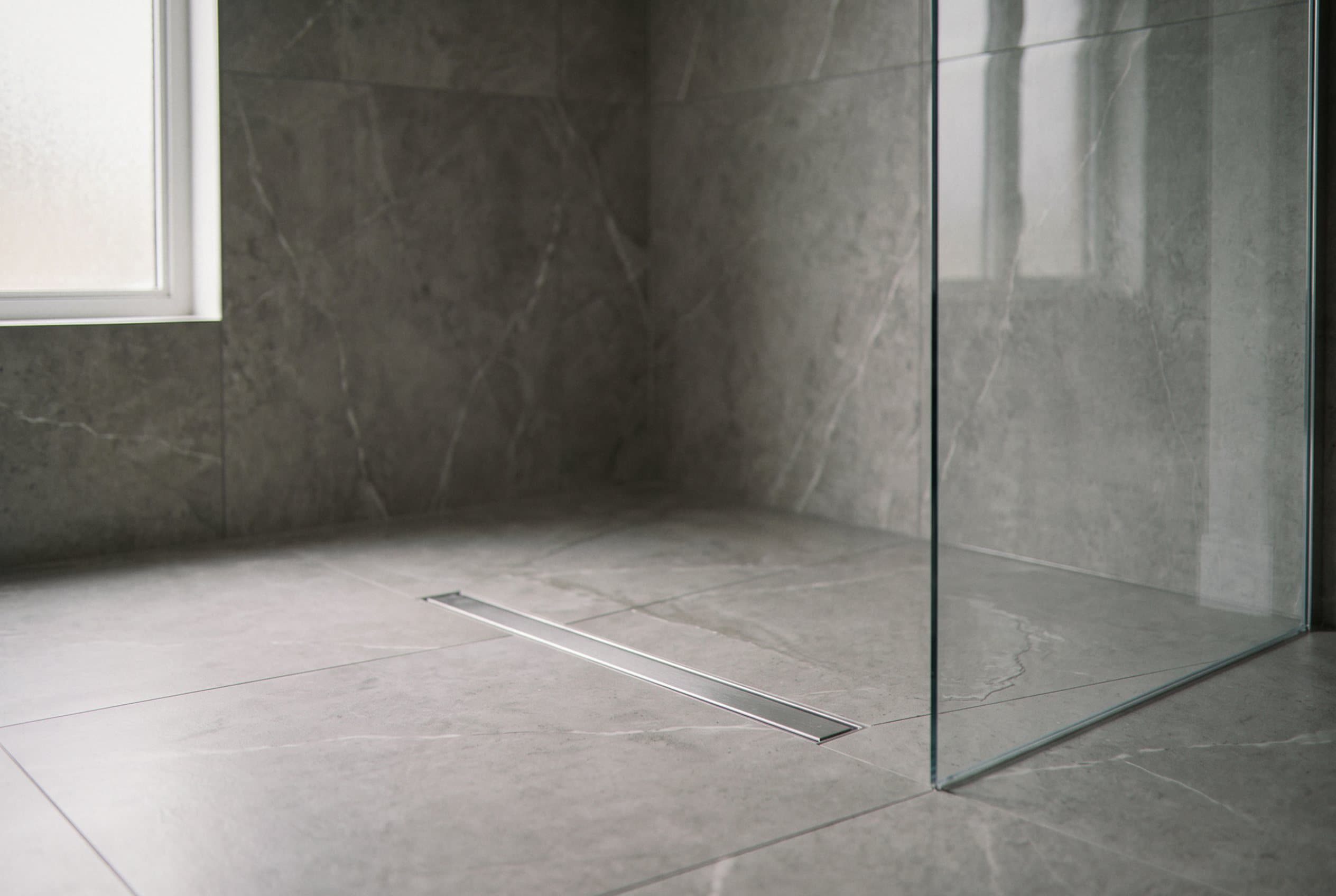
How we run a bathroom tile job in Dearborn
Most Dearborn bathrooms we work in were framed a long time ago. The brick bungalows off Warren Avenue and the postwar colonials on the west side usually hand us the same room. It measures about five feet by eight feet, has one small window, a heavy tub sitting on old joists, and plaster that has taken sixty years of steam. We start by pulling the old surface back to framing or slab. Nothing gets tiled over. Once the room is open we can see what we are really dealing with, and we tell you the same day. Soft subfloor, a weeping valve, joists that bounce, a drain sitting too high. Those get fixed first, because tile only stays flat and tight when the layer under it is flat and tight.
After the room is sound we build it back in layers. The floor gets a stiff base, screwed down so it will not flex, then a leveling pass if the old house has settled toward the middle. Wet walls get backer board and a waterproof coat that carries over the seams, the corners, and the curb. In a shower we flood test the pan before a single tile is set. That test costs us a day. It is the cheapest day of the whole job. Then tile goes on with the right mortar for the material, the joints are held to one width, and grout goes in after the mortar has truly cured instead of the next morning.
- We take the room down to framing or slab, so new tile never sits on a soft or hollow layer.
- Every shower pan gets a flood test before tile, and we hold the water long enough for a slow leak to show itself.
- Floors get leveled first, which is why our grout lines stay straight in old Dearborn houses that have settled.
- We plan the layout around the wall you see when the door opens, so cut pieces land where nobody looks.
- The same crew that opens the room finishes it, so nothing gets lost between one trade and the next.
Two things wreck bathroom tile around here, and both are avoidable. The first is water that gets behind the tile instead of running off it. Tile and grout are not waterproof on their own. The barrier lives behind them, and if it stops at the wrong height or skips a corner, the wall rots quietly for years before one tile ever moves. The second is movement. A bathroom on the second floor flexes every time someone walks in, and rigid tile cracks along that line. We stiffen the deck and add a membrane so the tile and the wood can move a little apart from each other. Winter counts too. A basement bathroom on a cold slab stays cold under bare feet, so we run a heat mat under the tile while the floor is open.
If your Dearborn bathroom is due, call us and tell us what the room is doing now. Cracked grout, a soft spot by the tub, a shower that smells damp, or a floor you have hated since the day you moved in. We will come out, measure, and give you a straight plan for the work. Then we do the work ourselves.